UK's Leading Bank
Role: Lead UX & Content Designer working with another Sr UX Designer
Project Context:
Creating an app that delivers excellent, inclusive experience for consumers, addressing accessibility needs and new‑age digitisation. Key user pain points included confusing navigation, poor accessibility support, long task completion times, fragmented self‑service flows, and high dependency on phone/in‑branch support.
Goals:
Primary: Deliver a self‑serve mobile app that enables customers to complete core banking tasks independently.
Business: Increase digital adoption and market penetration, reduce call‑centre volume and operational costs, and improve NPS.
Experience: Meet WCAG AA accessibility, reduce average task time, and improve conversion on digital product signups (e.g., cards, savings).
Success metrics (targeted)
Self‑serve completion rate: 80% for top 5 tasks.
Call volume reduction: 30% in 12 months.
Digital activation growth: +25% new registrations Q-over-Q.
My Role (Lead UX Designer)
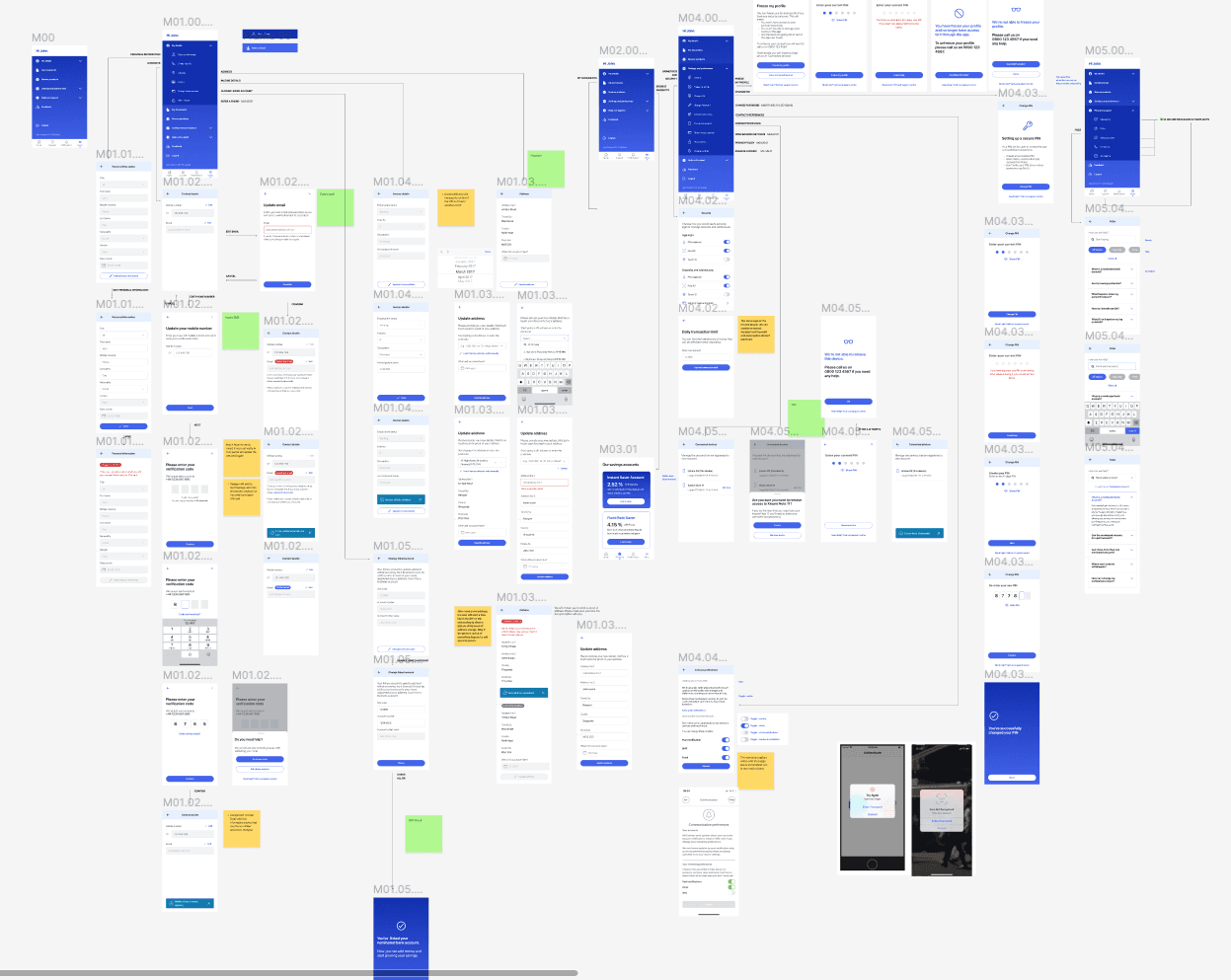
- Ownership: Led end‑to‑end UX for the mobile app redesign from discovery through delivery.
- Research: Designed and executed mixed‑methods research, moderated usability sessions, and synthesised insights into clear design priorities.
- Design leadership: Architected task‑centric flows, interaction patterns, and an accessible component library in Figma.
- Collaboration: Facilitated cross‑functional workshops with Product, Engineering.
- Mentorship: Coached mid‑level designers, set design review standards, and evangelised design systems and data‑driven decision making across teams.
Design Steps
1. Discovery & Definition
- Conducted stakeholder workshops to align on business outcomes and technical constraints.
- Ran mixed‑methods research: 20 in‑depth user interviews (diverse accessibility needs), 50+ survey responses, and analytics review of existing app funnels to identify high‑dropoff tasks.
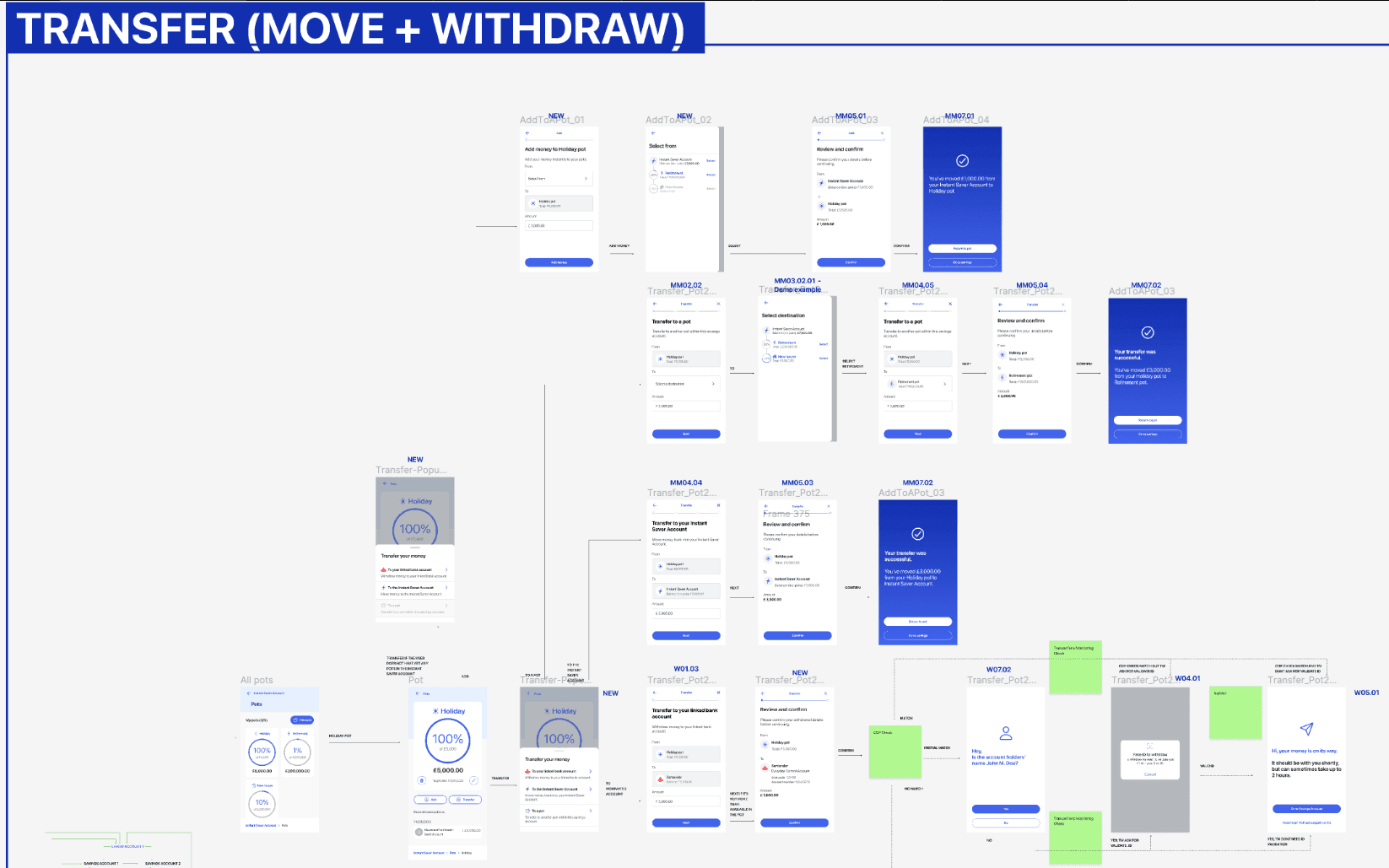
- Synthesised insights into personas, journey maps, and a prioritized list of top 5 user tasks (balance checks, transfers, Savings pots, statements, profile update).
2. Design
- Created task‑centric flows with progressive disclosure to simplify decision points for novice users while preserving power‑user shortcuts.
- Built a scalable component library in Figma.
- Designed modular onboarding and quick‑action cards to reduce time‑to‑value for new users.
3. Validation
- Rapid prototyping and iterative usability tests (remote and in‑person) with participants.
- Accessibility audits in team collaboration.
- A/B tests for onboarding and primary CTA placements to maximise activation.
4. Handoff
- Created a living design system and handover documentation, plus playbooks for product teams to design accessible features.
Key Takeaways
Prioritising core user tasks and accessibility delivers measurable business impact and cost savings.
A living design system plus close engineering partnership materially accelerates delivery and consistency.